
After The Combine: Setting The Stage For 2027
If you’re reading this now on the other side of Harvest 2026 – congrats, we made it!! (Or hopefully starting to see the end in sight if not quite.)
But, as in most things in agriculture, our work here is not quite finished. This time spent after harvest wraps can be incredibly beneficial in setting us up for success in 2027. This fall has brought a few added layers of complexity. With diesel and fertilizer prices, there’s been plenty of conversation about where to invest and how to make the most of every dollar this fall. As we transition into the next crop year, there are a few key considerations that can help guide your decisions this fall. From understanding your soil nutrient levels to optimizing fertilizer placement and timing, a little planning now can go a long way toward setting your farm up for success in 2027.
1. Soil Sampling: Know Before You Grow
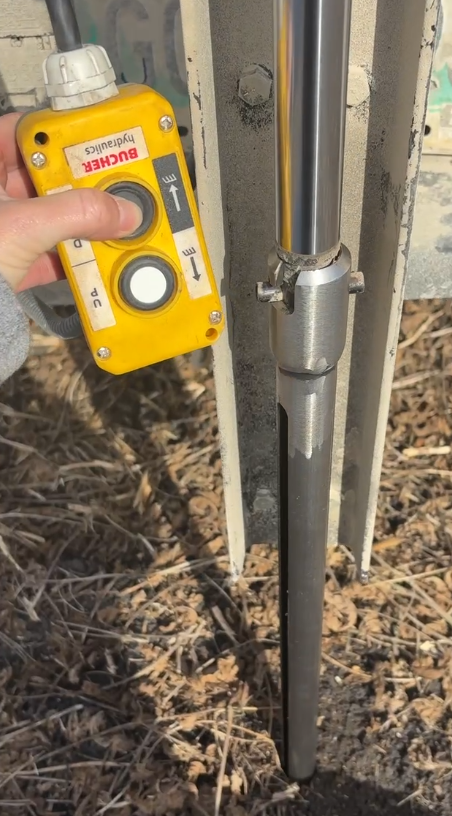
Fertilizer costs are weighing heavily on many growers’ minds and budgets right now. Combine that with a wet growing season and mixed harvest results, and you may also be wondering what nutrients remain in your soil after this year’s crop. This is an excellent time to evaluate soil nutrient levels, and make a plan to feed based on crop requirement, vs historical applications – if you haven’t already.
We have added a new piece of equipment to the farm this year – a truck mount hydraulic soil probe – and our very own Holly Johnson has been covering acres to help us build that story and fertility plan.
Her process: We have the farm split into 3 different zones, or productivity levels, where each field would have a mix of all three zones. Holly is sampling each zone separately, taking a probe of the top 24”. From here, it’s split out to be one sample from the top 0-6”, and one sample from the 6-24” - allowing us to better understand nutrient distribution throughout the soil profile.
What are we seeing on the farm?
We’re still waiting on results from our last few soybean fields, but we’ve already seen a range of residual nitrogen levels across the farm. Averaged by crop, oats had the lowest residual N at 9 lbs/ac, followed by wheat at 12 lbs/ac and soybeans at 22 lbs/ac (with a few results still outstanding). Canola ground had the highest residual N levels, averaging 48 lbs/ac.
This just goes to reinforce the idea that every field is different, and regardless of the type (composite, grid, zone), soil sampling can help ensure your fertility dollars are working for you.
2. Soil Temperature: Timing your Nitrogen Application
October has been beautiful so far, with warm, dry days giving many growers a welcome opportunity to get the crop off. But as temperatures begin to drop, it’s important to keep soil conditions in mind before applying nitrogen. Traditionally, Manitoba Agriculture has recommended waiting until soil temperatures reach 5°C or lower before applying fall nitrogen. Cooler soil temperatures slow the microbial processes responsible for converting ammonium to nitrate, helping reduce the risk of nitrogen loss over the fall, winter, and spring. While air temperatures can give us a general idea of changing conditions, soil temperatures are most important for telling the story.
As part of her soil sampling work, Holly has also been monitoring soil temperatures this past week. Here’s what she recorded:
Tuesday, October 6 at 2:00 pm: 19°C at 2 inches and 8°C at 6 inches.
Wednesday, October 7 at 11:30 am: 14°C at 2 inches and 5°C at 6 inches.
These readings are a useful reminder that soil temperatures can vary considerably with depth, even as fall progresses. Before making application decisions, be sure to check conditions in your own fields and follow current provincial recommendations for nitrogen timing and placement.
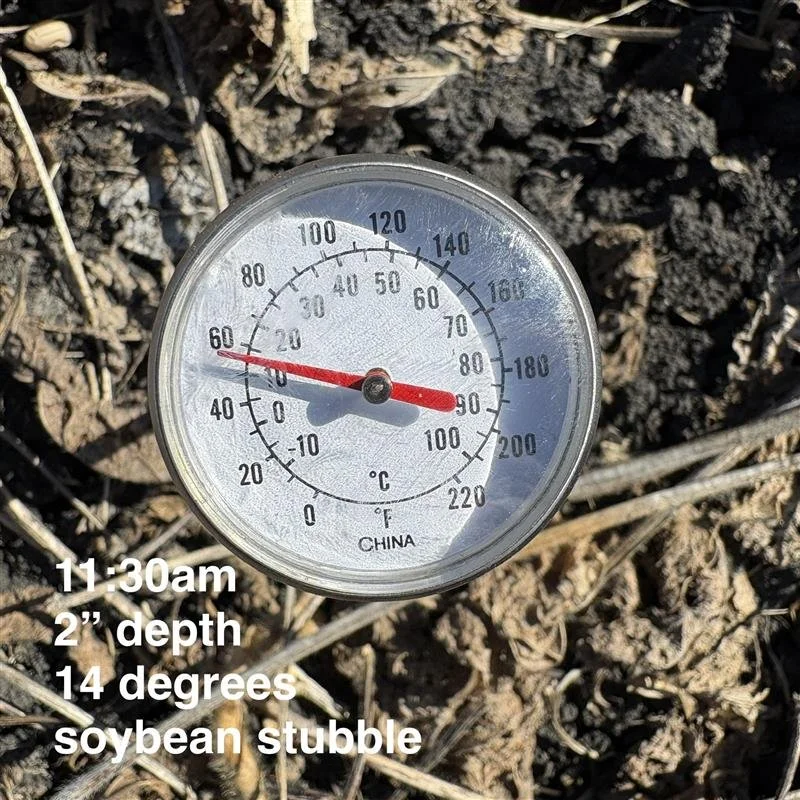
Taken October 7th
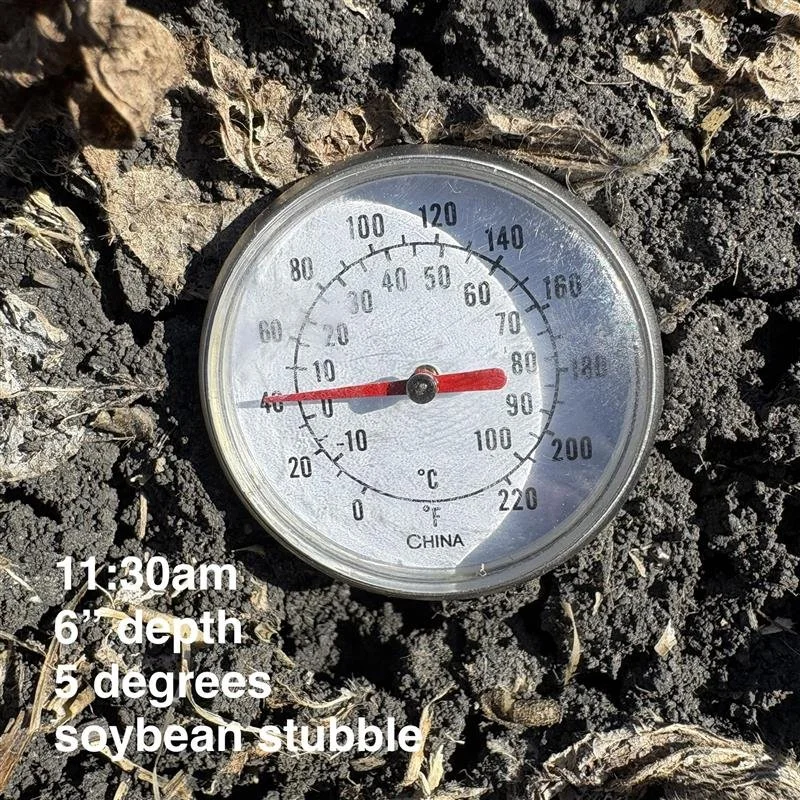
No soil temperature probe? No problem! Manitoba Agriculture provides a helpful online resource with soil temperature readings from locations across the province: https://www.gov.mb.ca/agriculture/weather/soil-temperature.html
Looking Ahead to 2027
At the end of the day, the right decisions will always come back to what makes the most sense for your operation. We understand that growers are balancing a lot of competing priorities this fall, and changing weather conditions and input costs only add to those decisions. Taking the time to understand your soil requirements, review your fertilizer strategy, and monitor conditions can help you make informed choices as you plan for the season ahead.
-Breanna Miller (with great farm insights from Holly Johnson!)