
Wheat Midge: What We Saw This Year and What It Means Going Forward
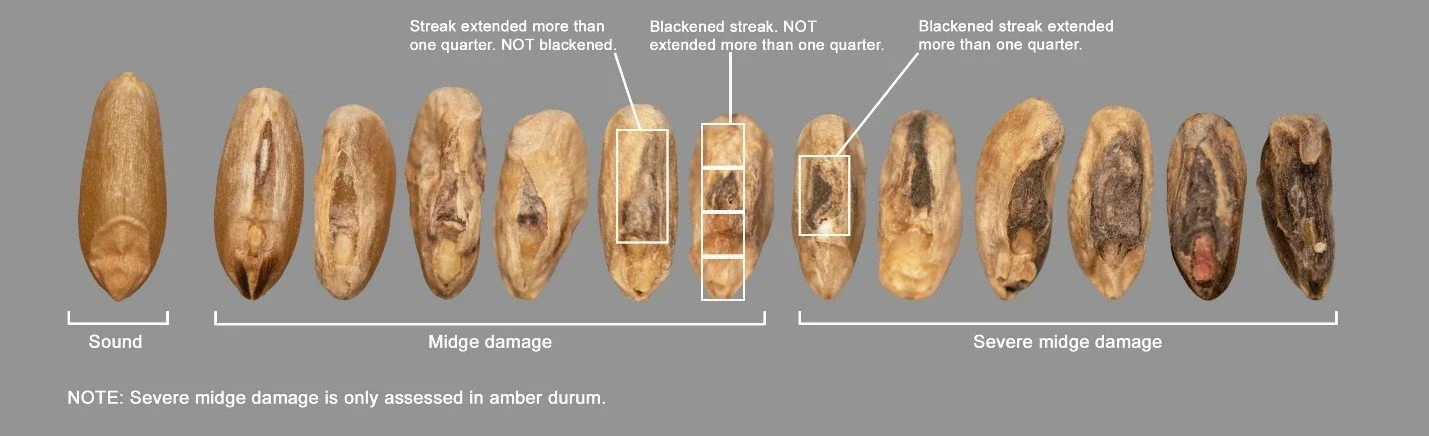
As harvest has progressed across the Red River Valley, one thing we’ve noticed more of this year is wheat midge damage.
Wheat midge isn’t new to Manitoba, but activity can vary significantly from year to year. After seeing increased damage in our area this season, it’s a good reminder of how the insect works, why populations can carry over, and the role midge-tolerant varietal blends can play in managing that risk.
Understanding the Midge Cycle
Wheat midge spends most of its life in the soil. Larvae overwinter underground and, when moisture and temperature conditions are right, emerge as adult midge around wheat heading.
The adult itself doesn’t damage the crop. The concern is the female laying eggs on wheat heads. Those eggs hatch and the larvae feed directly on developing kernels, which can result in shrivelled or damaged seed, lower yield and, in heavier infestations, grade loss.
After feeding, the larvae eventually drop back to the soil where they overwinter and begin the cycle again.
That last part is important following a year like this one.
When we see increased midge activity and damage in a growing season, there is potential for a larger population to carry into future seasons. Not every larva will necessarily emerge the following year, some can remain dormant in the soil for more than one season, but increased activity is something growers should keep in mind when making variety and management decisions going forward.
Timing Makes the Difference
The amount of damage midge causes depends heavily on timing.
Wheat is most susceptible from heading until flowering. If adult midge populations peak while a field is at the right stage for egg laying, damage can occur quickly. Once the crop moves through flowering, the risk drops considerably.
This is why two wheat fields in the same area can experience very different levels of damage depending on variety, seeding date and crop staging.
Where Varietal Blends Fit
One of the best tools we have for managing wheat midge is midge-tolerant varietal blends.
Varieties such as AAC Walker VB carry midge tolerance through the Sm1 gene. These varieties are sold as a blend of 90% midge-tolerant seed and 10% susceptible refuge seed.
That refuge is there for a reason.
The susceptible plants allow a small portion of the midge population to survive without being exposed to the resistance trait. Those insects can then mate with any midge that may have overcome the Sm1 resistance, helping slow the development of a resistant midge population.
In other words, the blend helps protect the crop today while helping preserve the technology for the future.
That’s also why growers shouldn't clean, separate or attempt to recreate a varietal blend themselves. Maintaining the proper refuge is important to protecting the effectiveness of midge-tolerant wheat.
Looking Ahead
Seeing more midge damage this year doesn’t necessarily mean we will have a major outbreak next year. Weather, soil moisture, crop staging and natural enemies all play a role in determining how much pressure we see in any given season.
But after a year with increased activity, it is worth paying attention.
For growers who have seen midge damage this harvest or who regularly grow wheat in areas with a history of midge pressure, a midge-tolerant varietal blend is worth considering when planning next year’s wheat acres.
~Jacques Remillard